Design
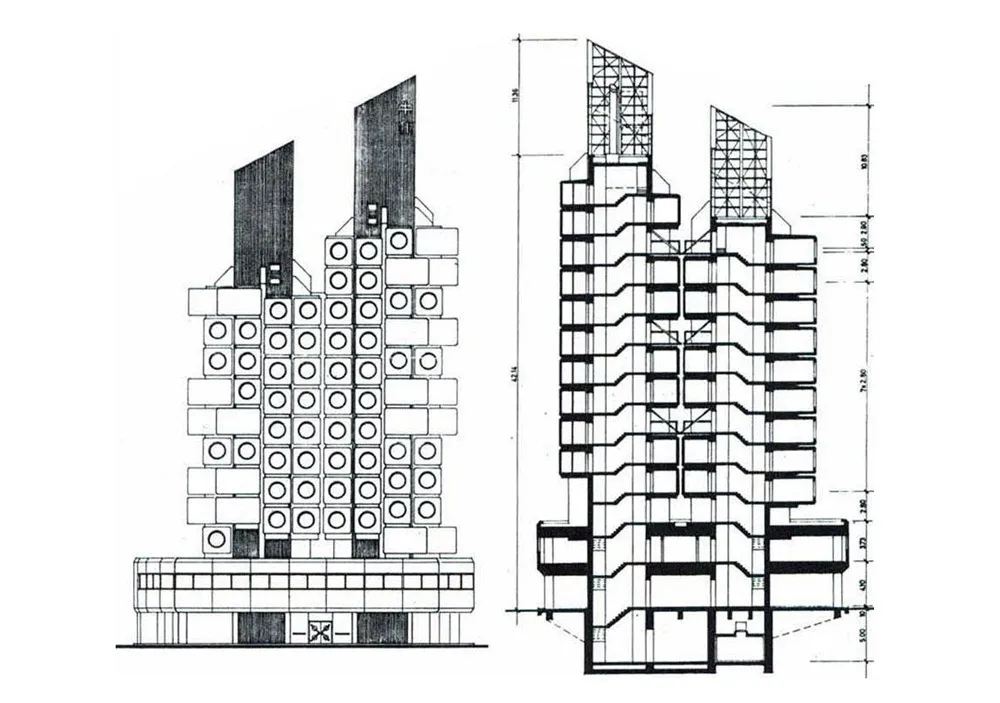
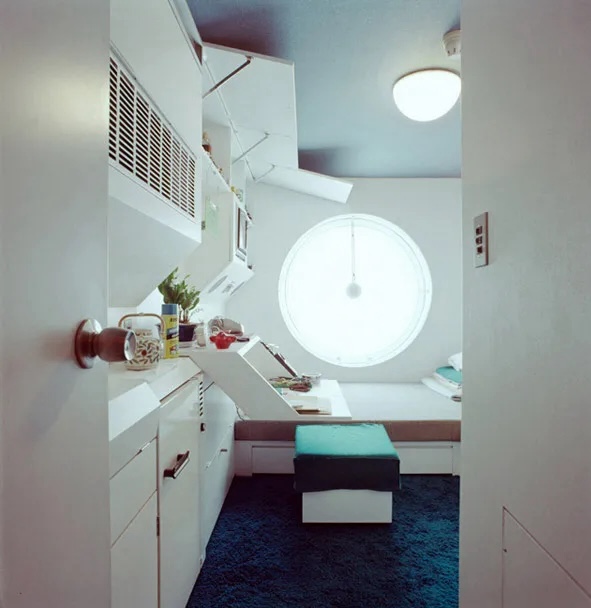
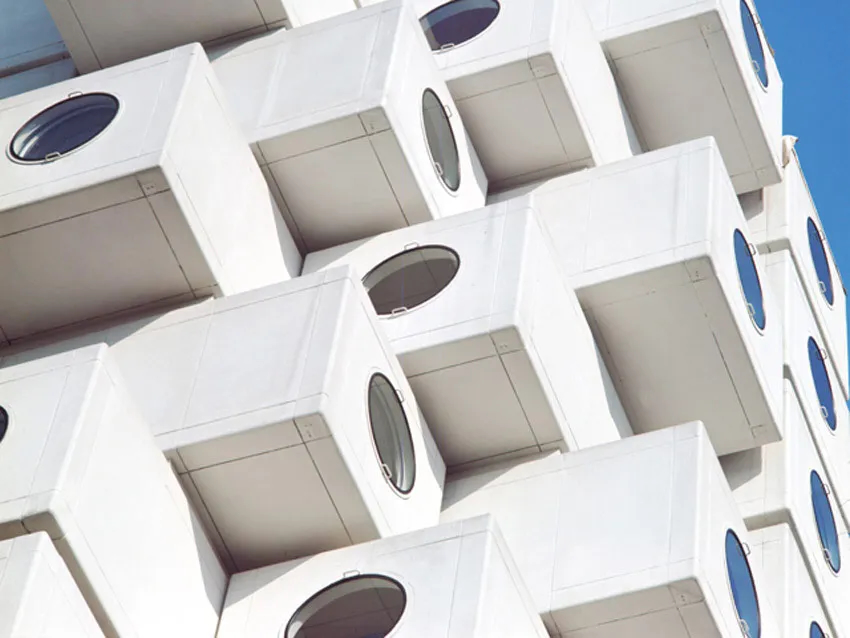
The building was conceived as two towers with 144 detachable and replaceable capsules (prefabricated off site) which could be used as studios or as residences. Each capsule mirrored the structure and scale of a shipping container (7.5 x 12.5 x 7 feet / lightweight steel frame with reinforced steel panels) but with a porthole window in Plexiglas of 4.5 ft diameter. Interiors were fitted out with a bed, a bathroom unit and various appliances including a colour TV and a desk calculator. The cost in 1972 was equivalent to that of a luxury car.
‘The Nakagin Capsule Tower represents a significant historical moment in post-war architecture. Its design embodies the Metabolists’ urban and social ideals: a city of mobility and flexibility, and a system adapted to the needs of a fast-paced, constantly changing society. The building celebrates the idea of interchangeability and flexibility through the capsule, and its history reflects the rise and fall of Metabolism’s technological utopias and the transformation of Japan’s urban culture since the early 1970s. The Tower thus stands as a living fossil offering a comprehensive lesson in the success and failure of post-war avant-gardes.’ (Zhongjie Lin (2011) ‘Nakagin Capsule Tower: Revisiting the Future of the Recent Past’, Journal of Architectural Education, 65:1, 13–32).
Architecture (is) a theatre stage setting where the leading actors are the people, and to dramatically direct the dialogue between these people and space is the technique of designing.
- Kisho Kurokawa